Stop the Shake: The Science of Decoupling Your Audio Gear

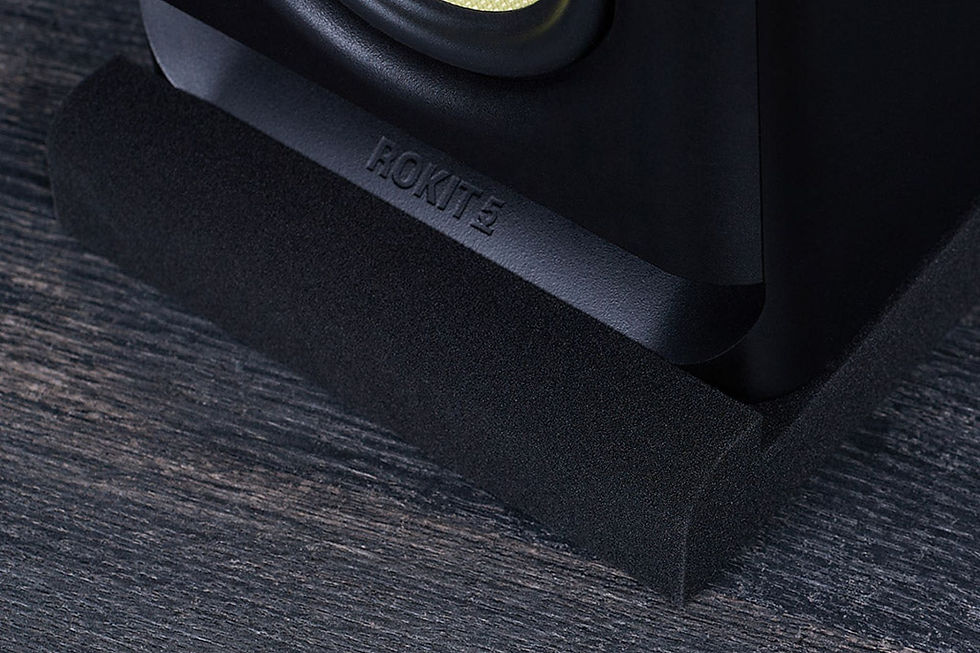
In high-quality audio systems, every component influences the final listening experience, not just the speakers themselves, but also the surfaces they rest upon.
Many listeners invest heavily in studio monitors, subwoofers, amplifiers, and room treatment, yet overlook one surprisingly important factor: mechanical vibration transfer between the speaker and the supporting surface.
When monitors sit directly on a desk or subwoofers rest rigidly on a floor, unwanted vibrations travel into the surrounding structure. These vibrations interact with furniture, walls, and flooring materials, producing resonances and sonic coloration that compromise accuracy and clarity.
The result is often bass that sounds muddy, exaggerated, or inconsistent, along with reduced stereo imaging and diminished transient definition.
Isolation pads are designed specifically to address these problems. By decoupling speakers from the surfaces beneath them, they help preserve the integrity of the original audio signal and improve overall sonic accuracy.
Understanding how and why isolation works can dramatically improve both professional and home listening environments.
The Acoustic Problem with Direct Speaker Placement
Speakers Generate More Than Airborne Sound
Loudspeakers do not only move air, they also generate mechanical energy.
As a woofer cone moves forward and backward, Newton’s Third Law comes into play: every action produces an equal and opposite reaction. This means the speaker cabinet itself experiences reactive force and vibration.
When a speaker sits directly on a rigid surface such as:
A desk
Hardwood flooring
Shelving
A console cabinet
A studio workstation
those vibrations transfer directly into the structure supporting it.
This creates unintended acoustic interactions that alter what the listener hears.
Mechanical Coupling and Vibration Transfer
What Is Mechanical Coupling?
Mechanical coupling occurs when two solid objects are rigidly connected in a way that allows vibrational energy to pass freely between them.
When monitors or subwoofers are placed directly on hard surfaces, the speaker and the supporting structure effectively become one connected vibrational system.
The desk, floor, or furniture begins resonating along with the speaker.
Instead of hearing only the intended audio signal, listeners also hear:
Surface resonances
Structural vibrations
Secondary acoustic radiation
Frequency exaggeration or cancellation
This additional energy colors the sound and reduces playback accuracy.
Why Bass Frequencies Are Most Affected
Low frequencies contain significantly more energy than midrange or treble frequencies.
Because bass wavelengths are long and powerful, they easily excite nearby surfaces and structures.
This often causes:
Boomy bass
Blurred low-frequency detail
Smearing of transients
Reduced punch and articulation
For example:
A subwoofer on a wooden floor may cause the floor itself to resonate
Studio monitors on a desk may create desk vibrations that reinforce certain bass frequencies
Furniture vibrations may generate rattles and sympathetic resonance
The listener perceives these artifacts as muddy or uncontrolled sound.
How Surface Resonance Degrades Audio Fidelity
Unwanted Sound Coloration
Every physical structure has its own natural resonant frequencies.
When speaker vibrations excite these resonances, the supporting surface begins amplifying certain frequencies while suppressing others.
This creates tonal imbalance.
Instead of neutral playback, the listener hears a version of the audio modified by the acoustic behavior of the desk or floor.
Smearing and Loss of Clarity
Resonating surfaces continue vibrating slightly after the original signal stops.
This lingering energy reduces temporal accuracy and blurs fine detail.
The effects may include:
Reduced bass tightness
Less defined kick drums
Poorer stereo imaging
Reduced vocal clarity
Inaccurate monitoring decisions
In studio environments, these inaccuracies can lead to flawed mixing and mastering choices.
In home listening spaces, they simply reduce immersion and realism.
How Isolation Pads Solve the Problem
The Principle of Decoupling
Isolation pads function by decoupling the speaker from the supporting surface.
Rather than allowing direct rigid contact, the pad creates a controlled mechanical barrier that absorbs and dissipates vibrational energy.
This reduces the amount of vibration transmitted into the desk, stand, or floor.
Instead of the supporting surface becoming acoustically active, the energy remains more effectively contained within the speaker system itself.
The Physics Behind Isolation Pads
Energy Absorption and Damping
Isolation pads are typically made from acoustically engineered foam, rubber, elastomer compounds, or composite materials.
These materials possess damping properties that:
Absorb vibrational energy
Convert portions of that energy into minute amounts of heat
Reduce structural resonance transmission
This process minimizes secondary vibrations that would otherwise color the sound.
Reduced Structural Resonance
By interrupting the direct mechanical path between speaker and surface, isolation pads:
Prevent desks from vibrating sympathetically
Reduce floor-borne bass transmission
Minimize resonance buildup
Improve low-frequency accuracy
The result is tighter, cleaner, more controlled sound reproduction.
Audible Benefits of Proper Isolation
Tighter Bass Response
One of the most noticeable improvements is enhanced low-frequency control.
Listeners often experience:
Better bass articulation
More accurate kick drum definition
Reduced boominess
Faster transient response
Bass becomes more precise and easier to interpret.
Improved Stereo Imaging
Mechanical resonance can subtly smear spatial cues.
Isolation helps preserve stereo localization and imaging accuracy by reducing unintended acoustic interference.
This creates:
Better instrument separation
More focused center imaging
Greater depth perception
More Accurate Monitoring
For audio professionals, isolation pads help create a more trustworthy monitoring environment.
Accurate monitoring leads to:
Better mixing decisions
Improved translation between playback systems
Reduced listening fatigue
Even small reductions in resonance can significantly improve critical listening accuracy.
Material and Design Considerations
Density Matters
The effectiveness of an isolation pad depends heavily on matching the material density to the speaker’s weight.
Pads that are too soft may:
Compress excessively
Become unstable
Reduce effectiveness
Pads that are too rigid may fail to absorb enough vibrational energy.
Well-designed isolation systems balance support and damping.
Foam vs. Rubber vs. Composite Materials
Different materials behave differently acoustically.
Acoustic Foam
Lightweight
Effective for moderate isolation
Common for desktop monitors
Rubber and Elastomers
Better low-frequency damping
Higher durability
Effective for heavier speakers and subwoofers
Composite Designs
Some advanced products combine multiple material layers to broaden isolation performance across frequency ranges.
Ergonomic and Angular Design
Many isolation pads include angled surfaces that allow monitors to be tilted upward or downward.
This improves:
Driver alignment with ear level
Listening axis accuracy
Imaging precision
Acoustic optimization and ergonomic positioning often work together.
Practical Recommendations for Using Isolation Pads
For Studio Monitors
Position Monitors Symmetrically
Maintain equal distance between:
Left and right speakers
Listener and speakers
Side walls when possible
Use Isolation Pads Under Each Monitor
Place pads directly beneath the speaker cabinet to minimize desk interaction.
Aim Tweeters at Ear Height
Use angled pads if needed to align the acoustic axis properly.
For Subwoofers
Isolate the Subwoofer from the Floor
This is especially important on:
Hardwood flooring
Raised wooden structures
Apartment environments
Multi-story homes
Reduce Structural Bass Transmission
Isolation can help minimize vibration transfer into walls and neighboring rooms.
Experiment with Placement
Subwoofer performance depends heavily on room acoustics. Isolation pads improve mechanical decoupling, but placement optimization remains critical.
Isolation Is Not a Substitute for Acoustic Treatment
While isolation pads significantly reduce mechanical vibration transfer, they do not replace broader acoustic treatment strategies.
Optimal sound quality usually involves a combination of:
Proper speaker placement
Bass trapping
Reflection management
Acoustic panels
Speaker isolation
Together, these elements create a more accurate and immersive listening environment.
Conclusion
Placing subwoofers or monitors directly on desks or floors may seem harmless, but the acoustic consequences can be substantial. Mechanical coupling transfers vibrational energy into surrounding structures, creating resonances, coloration, and muddy bass response that compromise sound fidelity.
Isolation pads address this issue by decoupling speakers from supporting surfaces and reducing the transmission of unwanted vibrations. Through carefully engineered materials and damping properties, they help preserve low-frequency accuracy, improve transient clarity, and enhance overall sonic precision.
Whether in a professional studio, home theater, podcast setup, or desktop listening environment, proper speaker isolation is a simple yet highly effective step toward achieving cleaner, tighter, and more accurate sound reproduction.
In audio engineering, small physical changes often produce surprisingly large acoustic improvements, and speaker isolation is one of the clearest examples of that principle in action.


Comments