Why Your $10,000 Speakers Sound Like $100 Without Acoustic Treatment.

Updated: May 7
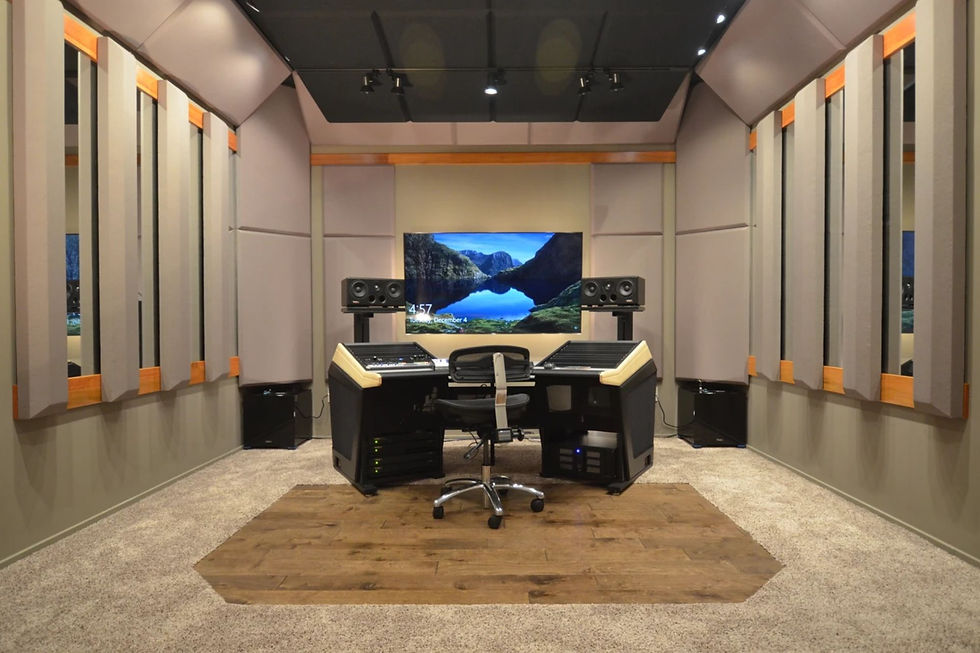
When homeowners invest in a high-quality sound system, the focus often lands squarely on the speakers, amplifier, or streaming source. Yet one of the most influential components in any home audio setup is something many people overlook entirely: the room itself.
A key concept in room acoustics is primary reflections, the earliest sound reflections that bounce off nearby surfaces before reaching your ears shortly after the direct sound from the speakers. These reflections dramatically shape how music, movies, and dialogue are perceived in a living space.
Whether you are building a dedicated listening room or simply trying to improve the sound in your living room, understanding primary reflections can transform your listening experience. The reality is that even world-class speakers can sound disappointing in an acoustically problematic room, while modest systems can perform remarkably well in a thoughtfully arranged space.
The Hidden Truth About What We Actually Hear
Most people assume they are hearing mainly the sound produced directly by their speakers. In practice, that is only part of the story.
In a typical residential environment, the sound reaching a listener is often roughly:
30% direct sound from the speakers
70% reflected sound shaped by the room
This balance varies depending on room size, furnishing, and listening distance, but the broader principle remains true: the room heavily influences the final sonic experience.
The direct sound is the audio that travels straight from the speaker to your ears without touching any surfaces. This sound contains the clearest representation of the speaker’s intended performance.
The remaining sound energy interacts with the room itself. It reflects off walls, floors, ceilings, windows, furniture, and other objects before arriving at the listener from multiple directions and at slightly different times.
These reflections create the acoustic “signature” of the room.
The Physics of Sound Reflection
Sound as Energy in Motion
Sound travels through air as pressure waves. When these waves encounter a surface, several things can happen:
Some energy is reflected
Some is absorbed
Some is diffused or scattered
Some may pass through the material
The balance depends on the material’s density, texture, and shape.
Hard, smooth surfaces such as glass, concrete, hardwood floors, and bare walls reflect sound efficiently. Softer materials like curtains, carpets, and upholstered furniture absorb more acoustic energy, particularly at higher frequencies.
What Are Primary Reflections?
Primary reflections are the first major reflections that arrive after the direct sound. These typically come from:
Side walls
Ceiling
Floor
Front wall behind the speakers
Furniture surfaces such as coffee tables or cabinets
Because these reflections arrive within milliseconds of the direct signal, the human auditory system blends them together rather than perceiving them as distinct echoes.
This blending process profoundly influences tonal balance, imaging, clarity, and perceived spaciousness.
Reflection Timing and Human Hearing
The human brain uses timing differences to determine where sounds originate. When reflections arrive very quickly after the direct sound, they alter localization cues and can either enhance or degrade the listening experience.
For example:
Reflections arriving within roughly 5–20 milliseconds can blur stereo imaging
Strong side-wall reflections may widen the soundstage but reduce precision
Excessive reflections can create comb filtering, where certain frequencies reinforce or cancel each other
This is why two identical speaker systems can sound completely different in separate rooms.
How Room Surfaces Shape Audio Perception
Walls
Side walls are often the most influential reflective surfaces in stereo listening environments. Early reflections from these walls affect:
Stereo imaging
Vocal focus
Instrument placement
Perceived width of the soundstage
Bare drywall tends to produce strong reflections that can make audio sound harsh or overly bright.
Floors and Ceilings
Hardwood, tile, or laminate flooring reflects large amounts of midrange and high-frequency energy. This can increase perceived brightness and reduce clarity.
Ceiling reflections also influence spaciousness and dialogue intelligibility, especially in rooms with low ceilings.
Area rugs, acoustic panels, and textured surfaces can help moderate these effects.
Furniture and Decor
Furniture contributes more to acoustics than many homeowners realize.
Large sofas absorb mid and high frequencies
Bookshelves scatter reflections and improve diffusion
Glass tables create sharp reflections
Curtains reduce high-frequency reflections from windows
A furnished room often sounds more balanced than an empty room because of these mixed absorption and diffusion characteristics.
The Impact of Primary Reflections on Audio Quality
Clarity and Detail
Strong uncontrolled reflections can smear transient information, the quick attacks of instruments and consonants in speech.
This reduces:
Vocal intelligibility
Instrument separation
Perceived detail
In home theaters, excessive reflections may make dialogue harder to understand even when the volume is high.
Warmth and Tonal Balance
Reflections also shape tonal character.
Rooms with many reflective surfaces often sound:
Bright
Harsh
Fatiguing
Rooms with too much absorption may sound:
Dull
Lifeless
Overly dry
The goal is balance rather than eliminating reflections entirely.
Spatial Impression and Soundstage
Some reflections are actually beneficial.
Controlled lateral reflections can create:
A larger sense of space
Greater immersion
More natural ambience
Concert halls intentionally use carefully managed reflections to create richness and envelopment. The same acoustic principles apply, on a smaller scale, in residential spaces.
Practical Ways Homeowners Can Optimize Primary Reflections
1. Start with Speaker Placement
Speaker positioning is one of the most powerful acoustic tools available.
General guidelines include:
Avoid placing speakers directly against walls
Create symmetry between left and right speakers
Angle speakers toward the listening position
Maintain reasonable distance from side walls
Even small adjustments can significantly change imaging and tonal balance.
2. Identify First Reflection Points
A common technique involves locating where sound first reflects off side walls.
One practical method:
Sit in the listening position
Have another person slide a mirror along the wall
Wherever you can see the speaker in the mirror is a primary reflection point
These areas are ideal locations for acoustic treatment.
3. Use Acoustic Treatment Strategically
Effective acoustic improvements do not require turning a living room into a recording studio.
Helpful treatments include:
Area rugs
Thick curtains
Fabric furniture
Acoustic panels
Bookshelves for diffusion
The objective is to manage reflections, not eliminate them completely.
4. Balance Absorption and Diffusion
Too much absorption removes energy and liveliness from the room.
A balanced acoustic environment usually combines:
Absorptive materials to control harsh reflections
Diffusive elements to maintain spaciousness and natural ambience
Rooms with varied textures and surfaces often sound more natural than completely bare or heavily damped spaces.
Why Expensive Speakers Alone Are Not Enough
One of the biggest misconceptions in home audio is that upgrading speakers automatically guarantees better sound.
In reality, room acoustics frequently produce a larger audible difference than changing electronics or speakers.
A premium speaker system placed in a highly reflective room may suffer from:
Poor imaging
Excessive brightness
Weak bass definition
Listening fatigue
Meanwhile, a modest system in a well-balanced acoustic environment can deliver impressive realism and enjoyment.
The listening room is not merely a container for sound, it actively becomes part of the audio system itself.
Conclusion
Primary reflections are among the most important yet least understood aspects of home audio performance. While speakers generate the original sound, the room determines how that sound ultimately reaches the listener.
In most homes, listeners hear far more than just direct speaker output. Reflections from walls, ceilings, floors, and furnishings shape clarity, warmth, imaging, and immersion in profound ways.
By understanding the physics of sound interaction and managing primary reflections thoughtfully, homeowners can dramatically improve their listening experience without necessarily purchasing new equipment.
Superior sound is not achieved through hardware alone. It emerges from the partnership between quality audio components and a room that supports, rather than fights against, the music.


Comments